As the US funeral industry becomes more competitive, importing caskets from China has become an attractive option for distributors looking to lower costs, expand product variety, and maintain profitability. However, importing caskets is not without challenges—ranging from quality assurance and regulatory compliance to logistics and customs.
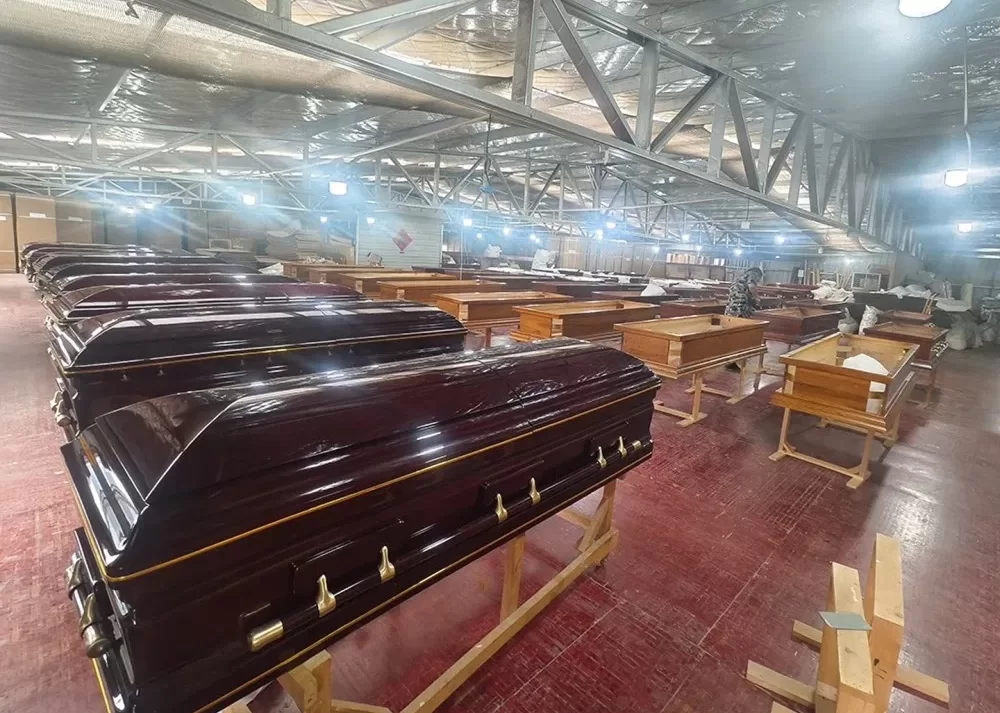
1. Understand the Chinese Casket Manufacturing Landscape
China’s casket industry has matured over the last decade, producing both wood caskets and steel caskets tailored to the US market. Top factories offer:
- Modern machinery for precision cutting and finishing
- Skilled labor for interior lining, hardware installation, and decorative finishes
- OEM and private-label services for distributors looking to brand their own lines
Key takeaway: Choosing the right factory—ideally with experience exporting to the US—is essential for consistent quality and reliability.
2. Define Your Product Specifications Clearly
Before contacting manufacturers, define:
- Material type: hardwood, softwood, or steel
- Couch style: half or full
- Exterior finish: gloss, semi-gloss, or matte
- Interior options: fabric, padding, hardware type
- Sizes and dimensions: US-standard measurements
- Order volume: MOQ and annual forecast
Having clear specifications ensures accurate quotes, faster sample approval, and reduced risk of errors.
3. Verify Quality Before Bulk Orders
Quality assurance is the most critical step when importing from China. Best practices include:
- Requesting physical samples before placing a large order
- Inspecting finish consistency, interior lining, hardware, and locking mechanisms
- Confirming dimensions match US standards
- Reviewing packaging for long-distance shipping
Working with reputable factories who provide detailed photos, production reports, and optional third-party inspections will reduce risk.
4. Understand Costs, MOQ, and Payment Terms
Pricing depends on:
- Material type (wood species or steel gauge)
- Interior quality and hardware
- Order quantity per model
- Packaging and shipping
Typical B2B arrangements include:
- MOQ per model to maintain factory efficiency
- Sample fees, often refundable upon bulk order
- Payment terms such as 30–50% upfront, balance before shipment
Tip: Always calculate landed cost (including freight, duties, and insurance) to compare against domestic alternatives.
5. Plan Logistics and Shipping Carefully
Shipping caskets from China requires careful planning:
- Production timeline: 30–60 days depending on complexity and quantity
- Ocean freight: 30–45 days
- Customs clearance: 5–10 days, depending on port and documentation
Recommended practices:
- Work with experienced freight forwarders familiar with casket imports
- Confirm container loading plans (20GP or 40HQ)
- Schedule shipments to align with high-demand seasons
Proper planning prevents delays, damaged goods, and unexpected costs.
6. Ensure Compliance with US Regulations
US distributors must comply with import rules:
- Correct HS codes (usually 9403.20.0000 for wood or 9403.30.0000 for metal caskets)
- Accurate commercial invoices and packing lists
- Proper wood treatment certificates if exporting treated wood
- Coordination with customs brokers for smooth clearance
Factories experienced in US exports can significantly reduce compliance risks.
7. Build Long-Term Partnerships with Manufacturers
Successful distributors treat Chinese factories as supply chain partners, not just vendors. Long-term relationships provide:
- Stable quality across batches
- Better pricing on repeated orders
- Priority production scheduling
- Easier custom product development
A reliable factory relationship is a major competitive advantage.
8. Common Mistakes to Avoid
- Choosing the cheapest supplier without verifying capability
- Skipping samples to save time
- Vague specifications leading to quality disputes
- Poor communication on logistics and timelines
- Frequent design changes without documentation
Avoiding these mistakes is critical for smooth importing and strong margins.
Conclusion
Importing caskets from China can be highly profitable for US distributors when done correctly. By focusing on:
- Choosing the right factory
- Defining clear specifications
- Verifying quality before bulk orders
- Planning costs and logistics carefully
- Ensuring regulatory compliance
- Building long-term partnerships
US distributors can expand product lines, maintain quality, and optimize costs—without the common pitfalls of international sourcing.
Tip for distributors: Consider balancing your sourcing strategy with a mix of bulk orders from China and premium or emergency stock from domestic suppliers for flexibility and fast delivery.